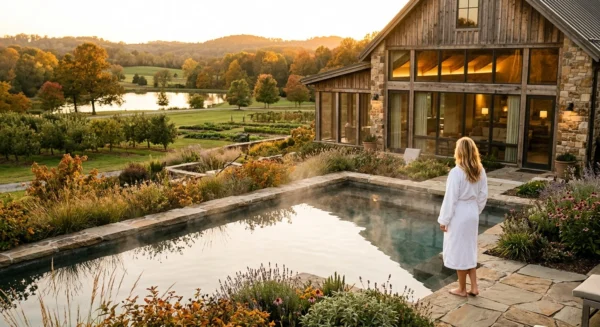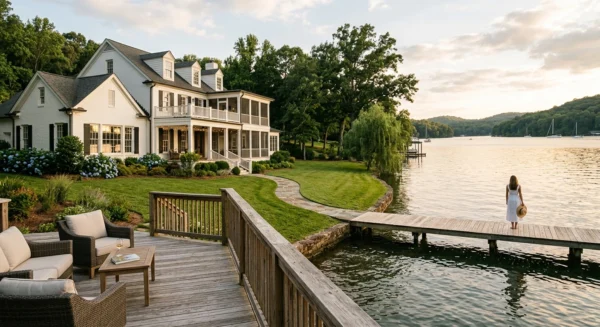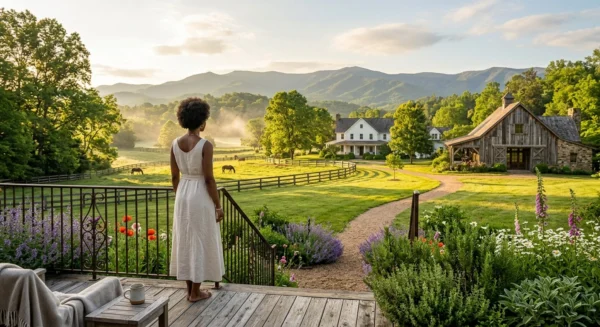
Franklin’s Most Sought-After Communities offer distinct interpretations of luxury. Options range from historic streets near Main Street to private estates in wooded hills. Some place cafés, shops, and parks within an easy walk. Others favor controlled access, generous homesites, and a quieter relationship with Middle Tennessee’s rolling landscape.
This guide does not present a statistical ranking. Instead, it considers architectural character, amenities, privacy, walkability, location, and current development activity. For relocating buyers, the right choice often depends less on prestige than on how a neighborhood functions each day.
A household arriving from New York or Chicago may prioritize walkability and architectural history. Meanwhile, a California buyer may seek newer construction, preserved green space, and convenient access to Cool Springs. Franklin accommodates each preference, although buyers rarely find them all within the same neighborhood.
What Defines Franklin’s Most Sought-After Communities?
Franklin’s luxury market draws much of its appeal from variety. Historic Downtown offers authentic 19th-century architecture and an established civic center. Westhaven and Berry Farms, by contrast, use master planning to combine homes, commerce, parks, and services.
Elsewhere, LaurelBrooke and the estate sections of Avalon emphasize gates, custom residences, and privacy. Legends Ridge provides a more conventional estate-neighborhood experience. Meanwhile, Lookaway Farms presents newer architecture within a landscape shaped by preserved open space.
Location also carries different meanings across Franklin’s most sought-after communities. Proximity to I-65 benefits commuters, while western and northern addresses offer a more residential atmosphere. However, traffic changes quickly by hour. Buyers should therefore evaluate actual routes rather than rely on fixed drive-time promises.
Historic Downtown Franklin: Architecture With a Daily Rhythm
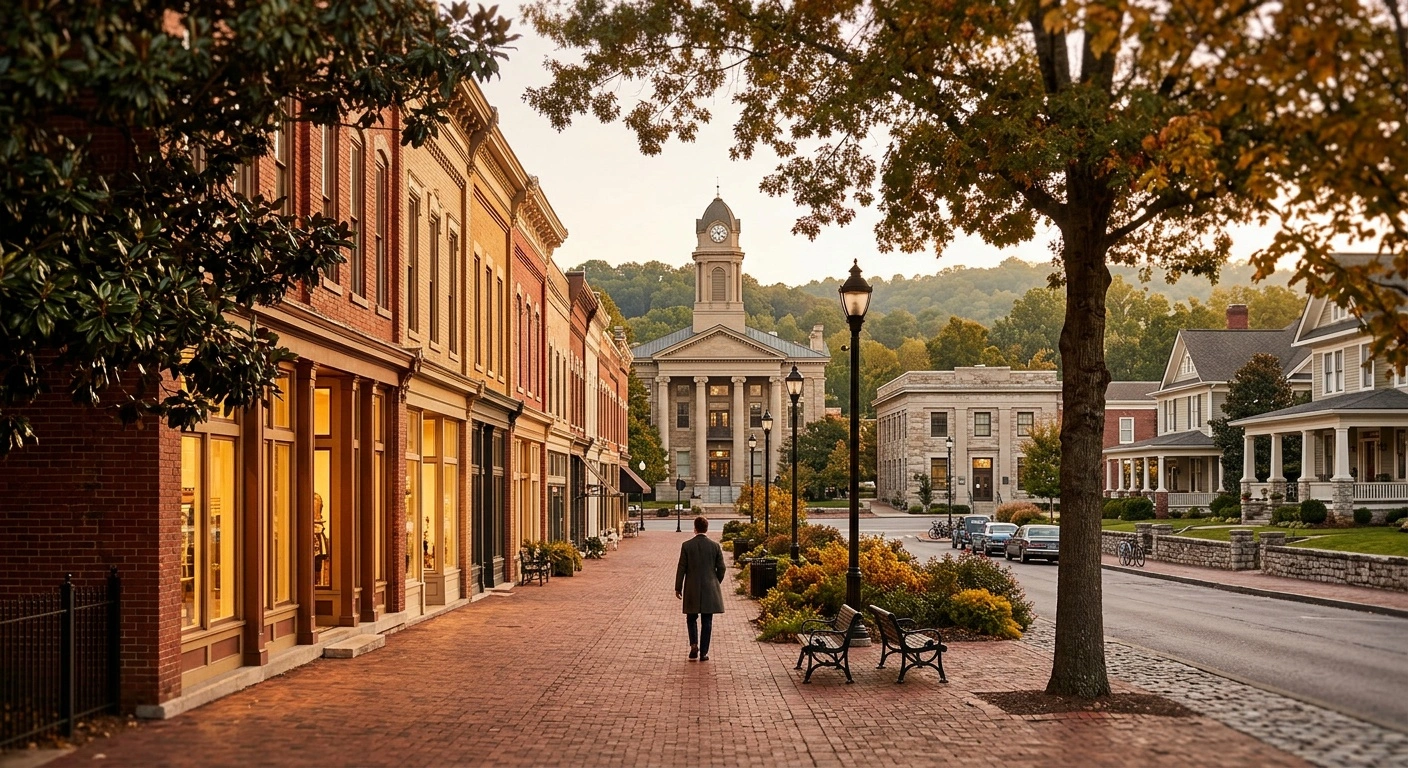
Downtown Franklin appeals to buyers who want history to shape everyday life. The walkable district spans 16 blocks around Main Street, Five Points, and the Public Square. Residences share the setting with churches, civic buildings, restaurants, shops, and professional offices.
The architecture supplies much of the emotional pull. Federal, Greek Revival, Italianate, and Victorian homes appear throughout the historic district. Meanwhile, two- and three-story brick buildings give the commercial core its traditional storefronts and upper floors.
Adjacent residential districts broaden the architectural vocabulary. Adams Street features early-20th-century Bungalow and Craftsman houses, while Hincheyville contains homes from several periods. Consequently, buyers can pursue historic character without limiting themselves to one architectural era.
Franklin’s story began in 1799, and downtown later became an influential preservation success. In 1995, the district received a Great American Main Street Award during the program’s inaugural year. Builders completed the Maury-Darby Building between 1815 and 1817. It remains the oldest building on the Public Square.
Living Near Main Street
Among Franklin’s most sought-after communities, Downtown provides the clearest version of true walk-to-town living. Its shops, dining rooms, services, and cultural destinations create an active daily pattern. In addition, The Factory at Franklin extends the experience northward through retail, dining, events, and performances.
The Factory remains open while renovations continue. Recent changes include the return of Saffire, the arrival of etch, and updates to Turner Theater. A museum devoted to the property’s history also opened in 2025.
Major civic work will reshape the center further. Franklin began construction on its new City Hall in May 2025 and expects completion in mid-2027. Plans include commercial spaces, a larger Public Square plaza, a one-acre park, wider sidewalks, and underground parking.
Just south of the core, the Margin District adds another layer of investment. The project incorporates the historic Handy Hardware building alongside retail, offices, parking, and 25 luxury residences. However, its businesses have not opened yet. The planned grand opening falls in 2028.
Historic ownership also demands thoughtful due diligence. Older structures may involve preservation requirements, specialized maintenance, and renovations that differ from conventional suburban work. Still, few Franklin addresses offer this combination of architectural integrity and daily walkability.
Westhaven: A Complete Village in West Franklin
Westhaven offers a broad lifestyle package within Franklin’s most sought-after communities. The 1,500-acre development sits along New Highway 96 West. Its walkable Village Center anchors daily life. Franklin’s comprehensive plan identifies Westhaven as the city’s largest neighborhood by acreage and dwelling count.
Compact blocks and pedestrian-oriented streets reflect New Urbanist planning principles. The community also mixes building types, uses, and densities through deliberate transitions. As a result, Westhaven feels more like a modern village than a collection of isolated subdivisions.
Housing includes detached residences, townhouses, condominiums, and dedicated options for residents ages 55 and older. This range supports several life stages within one community. In fact, its multigenerational character represents one of Westhaven’s strongest advantages.
Approximately half the completed community will consist of parks, trails, and green space. The developer expects about 3,500 residences at buildout, with development continuing to roughly 2031. Therefore, buyers encounter both mature sections and continuing construction.
Amenities and Village Life
The established Residents’ Club spans approximately 15,000 square feet. It includes fitness and movement spaces, an art center, a 37-seat theater, childcare, a playground, and the Great Lawn. Residents also have access to multiple pools, tennis, pickleball, and about nine miles of nature trails.
Westhaven Golf Club adds a private 18-hole course designed by Arthur Hills. Practice facilities, a performance center, and clubhouse dining support the golf experience. Notably, golf membership remains separate from the community’s general residential amenities.
The Village Center makes daily errands unusually convenient for suburban Franklin. Current businesses include Kroger, Scout’s Pub, High Brow Coffee, Sweethaven, Oscar’s Taco Shop, Boulevard Deli, and Ching Asian Bistro. Fika Cafe, Coal Town Public House, Bound Booksellers & Gifts, and Westside Wine & Spirits also contribute to the mix.
Healthcare, banking, education, fitness, veterinary care, and personal services further support local routines. Consequently, many residents can complete ordinary errands by foot or golf cart. Magli Green, a public lakefront park, gives the commercial center a welcoming outdoor anchor.
Westhaven continues to expand its active-adult offerings. Construction began in 2025 on Astor Club & Residences, a planned 211-residence rental community for adults 55 and older. Proposed amenities include pools, fitness spaces, pickleball, bocce, dining rooms, arts facilities, and wellness services.
LaurelBrooke: Established Privacy Along Sneed Road
LaurelBrooke suits buyers who place privacy and custom construction above walk-to-dining convenience. The gated estate community sits off Sneed Road in Franklin’s 37069 and Grassland area. From there, residents can reach Franklin Road, Old Hickory Boulevard, and northern Williamson County employment centers.
Southern Land Company began developing LaurelBrooke in the late 1990s. The community contains approximately 311 custom-home sites across several named sections. Mature landscaping, wooded surroundings, and a staffed gate create a composed arrival experience.
Architectural styles include French Chateau, Tudor Revival, and traditional Southern designs. Multiple custom builders shaped the neighborhood, so the streets avoid the repetition of a single production program. Moreover, estate-scale homes and established plantings give LaurelBrooke a settled character.
Many residences date from the late 1990s and 2000s. Buyers should therefore examine systems, renovations, and interior updates with the same care they give location and architecture. On the other hand, renovated homes may offer mature surroundings that newer communities cannot reproduce quickly.
LaurelBrooke remains car-oriented for most errands and dining. That tradeoff supports the separation many buyers value. Among Franklin’s most sought-after communities, it particularly appeals to executives seeking controlled access and an established estate address. It also stands apart from Franklin’s mixed-use alternatives.
Avalon and the Tors: Wooded Estates Near Cool Springs
Avalon extends across more than 600 acres between Cool Springs Boulevard and McEwen Drive. Its sections include the Meade, Villages, Hamlets, Vale, and Tors of Avalon. However, buyers should view these as distinct residential experiences rather than one uniform neighborhood.
The Tors and Vale form Avalon’s gated estate portion. Other sections offer a wider mix of detached houses and townhouses. Additionally, each association may maintain different rules, fees, design standards, and access arrangements.
The Tors occupies wooded, sloping terrain that supports privacy and elevated views. Custom homes respond to that landscape instead of following a flat suburban grid. Greater Avalon devotes more than 300 acres to natural or common space. Consequently, the preserved land reinforces the development’s wooded identity.
Access represents another major advantage. Under normal conditions, the Tors sits approximately five minutes from I-65 and eight minutes from CoolSprings Galleria. Still, buyers should test those routes during their expected commuting hours.
The original Avalon planned development has nearly reached buildout. Franklin’s 2025 development reporting recorded 445 approved residential units and 435 constructed units. Meanwhile, Avalon Square is a separate approved project. Buyers should not confuse it with the established residential sections.
Within Franklin’s most sought-after communities, the Tors and Vale merit attention from buyers seeking gated estates near Cool Springs. The broader Avalon community also serves those seeking more varied housing forms. Above all, section-specific due diligence matters here.
Legends Ridge: A Quiet Estate-Neighborhood Setting
Legends Ridge occupies Franklin’s rolling, wooded 37069 area. Large detached residences and quiet streets define the neighborhood more than shops or mixed-use activity. Most homes date from the 2000s or later.
The atmosphere feels distinctly residential. Unlike Westhaven or Berry Farms, Legends Ridge does not organize life around an internal commercial center. Instead, it appeals to households that prefer separation between home and retail activity.
This conventional estate-neighborhood format can feel familiar to buyers leaving affluent suburbs in other major metros. However, the Middle Tennessee terrain gives it a regional sense of place. Wooded common areas and rolling streets soften the scale of larger homes.
Buyers should confirm current association information directly during due diligence. They should also test driving routes to work, schools, and routine services. For the right household, the neighborhood’s quiet character outweighs its car dependence.
Lookaway Farms: Newer Design Amid Preserved Land
Lookaway Farms presents a newer expression of Franklin luxury near Clovercroft and Tulloss roads. The neighborhood centers on Lookaway Circle and favors large detached homes. Its emphasis falls on privacy, landscape, and residential design rather than club-style facilities.
Homes generally date from 2018 forward. Modern farmhouse, transitional, and warm-contemporary architecture distinguish the neighborhood from Franklin’s older brick and European-influenced estates. Consequently, Lookaway Farms often appeals to buyers seeking current floor plans and a fresher design language.
More than 100 acres of preserved green space surround the low-density community. Trails and open land shape the lifestyle, while a large pool or golf complex does not define it. That restraint gives the neighborhood a quieter relationship with its setting.
Cool Springs remains accessible through McEwen Drive or Cool Springs Boulevard. However, Clovercroft Road narrows to two lanes in places, and traffic can affect travel times. Buyers should consider both the appealing landscape and the practical realities of an evolving corridor.
Development pressure continues in the surrounding area, although nearby proposals do not automatically form part of Lookaway Farms. Meanwhile, infrastructure obligations within the subdivision remained active in 2026. Buyers comparing Franklin’s most sought-after communities should review current roads, drainage, and development status during the inspection period.
Berry Farms: South Franklin Convenience With I-65 Access
Berry Farms occupies 600 acres at the I-65 and Goose Creek Bypass interchange. The master-planned community combines residences, offices, shops, restaurants, hotels, and open space. For commuters, its interstate position provides one of Franklin’s most direct connections north.
A formal pattern book governs architecture, uses, site planning, and signage. The plan references Franklin’s historic character while creating a contemporary southern gateway. Residential streets feature porches, pedestrian connections, and links to parks and the Town Center.
Homes generally sit within a five-minute walk of shops, restaurants, offices, parks, a neighborhood pool, and bocce courts. Publix anchors the retail offering. In addition, approximately 40 restaurants and retailers occupy fully leased existing commercial space.
Berry Farms also contains substantial Class A office space and more than 1,300 existing homes. Town Center apartments currently operate at 6001 Hughes Crossing. Thus, the community serves homeowners, renters, office users, and visitors within one connected plan.
Construction and infrastructure changes remain part of the picture. Berry Farms Town Center continues active residential development, with more units approved than completed. Recent public work also adds roadway capacity, parking, and street extensions.
Among Franklin’s most sought-after communities, Berry Farms best suits buyers who value mixed-use convenience and interstate access. It feels more commuter-oriented than west Franklin’s residential enclaves. Still, I-65 conditions can change quickly, so direct access does not guarantee a consistent travel time.
Schools, Transit, and the Details Relocating Buyers Should Verify
Franklin addresses do not all feed into one public-school system. The Franklin Special District serves prekindergarten through eighth grade within a fixed portion of the historic city. However, its boundaries do not encompass every home inside modern Franklin city limits.
FSD students generally continue to Franklin High or Centennial High, depending on address. Other Franklin households use Williamson County Schools from the earlier grades. Because assignments can change, families should verify every prospective property through the current district locator.
This address-level review matters especially in large or segmented communities. Different sections of Avalon may not share identical assumptions, for example. Similarly, buyers should not infer a school assignment from a Franklin mailing address or nearby campus.
Pearre Creek Elementary physically sits within Westhaven, but individual homes still require verification. Published community materials associate several east Franklin neighborhoods with Clovercroft Elementary, Woodland Middle, and Ravenwood High. Nevertheless, Williamson County Schools remains the final authority.
Franklin Transit operates fixed routes and advance-reservation curb-to-curb service six days each week. Service covers Franklin, including Cool Springs. The city’s 10-year transit plan also seeks broader coverage and stronger regional connections. Even so, most estate communities remain car-dependent.
School boundaries and transportation options can shape daily life across Franklin’s most sought-after communities. Therefore, relocating buyers should verify both at the property level. General neighborhood descriptions cannot replace current district and transit information.
Choosing the Franklin Lifestyle That Fits
The most sought-after communities in Franklin do not follow one luxury formula. Downtown rewards buyers who prize history and genuine walkability. Westhaven offers the deepest multigenerational amenity package, while Berry Farms pairs mixed-use convenience with I-65 access.
LaurelBrooke delivers established gated living and staffed security. Avalon, particularly the Tors and Vale, combines wooded custom estates with Cool Springs proximity. Meanwhile, Legends Ridge offers a quieter residential pattern, while Lookaway Farms emphasizes newer architecture and preserved land.
Prospective buyers should spend time in each area at several points during the day. Morning traffic, evening activity, construction, and distance to routine services can change an impression quickly. In addition, association rules and development plans deserve the same scrutiny as interiors and finishes.
Franklin’s enduring appeal lies in these meaningful choices. A restored home near Main Street creates one version of luxury, while a wooded estate creates another. Ultimately, the best address is the one whose daily rhythm matches the life a buyer intends to build.